

The Multicultural Myth
Canada Welcomes South Asians. It Just Doesn’t Protect Us.

The Supreme Court of Canada begins hearing the final constitutional challenge to Bill 21 on March 23. I'm publishing this now because the conversation can't wait.
Canada has a brand. It is woven into our passports, the Charter, and an international reputation we guard like an unearned inheritance: we are the world’s multicultural success story. Since the official adoption of the policy in 1971, we have billed ourselves as a mosaic rather than a melting pot, a seductive fiction that tells the migrant they can keep their culture and their dignity at the same time.
To be sure, this myth is seductive. It offers a vision of a society where the trauma of assimilation is replaced by the joy of “celebrating diversity.” It is a comforting pipe dream for a nation that defines itself primarily by what it is not.
But for South Asians, the mosaic has become a trap. It is a decorative cage that demands we remain “colourful” enough to be celebrated as a demographic victory, but quiet enough to be managed as a political inconvenience.
The statistics suggest the performance is failing. Hate crimes targeting South Asians in Canada rose 143 per cent between 2019 and 2022. Online, anti-South Asian slurs skyrocketed by more than 1,350 per cent between 2023 and 2024. These are not the statistics of a country that has “solved” racism. They are the statistics of a nation state that has learned to perform tolerance while outsourcing the violence to subtler, softer, more deniable versions of power.
The multicultural framework, I have come to believe, is not a remedy for anti-South Asian racism. It is its cover. Even the term ‘South Asian’ functions as a convenient bureaucratic erasure, a broad umbrella appointed to a region defined by a myriad of ethnicities, languages, and conflicting national identities. The state prefers the monolith, because it is easier to manage a demographic than it is to protect a people.
This systemic failure manifests in the most polite of places. I keep coming back to a lunch I had while working as a legal assistant at a refugee law firm in Toronto. I had just come off a call with the Attorney General of Canada’s office. When I sat back down, a senior lawyer — a woman who spent her career performing the role of the righteous advocate for the Global South — looked around with a smile and said, in front of the whole team: “Haha, Zahra was on the phone using her white accent.”
In the Canadian legal imagination, a Brown woman is a client or a mascot, but never a peer. My voice was a costume she felt entitled to mock, a reminder that in these “progressive” circles, our belonging is conditional on our performance of otherness. This is what racism looks like in modern Canada. Not a burning cross, but a laugh at a lunch table, followed by silence, and then nothing. I complained to my boss. Nothing happened. A few months later, I quit.
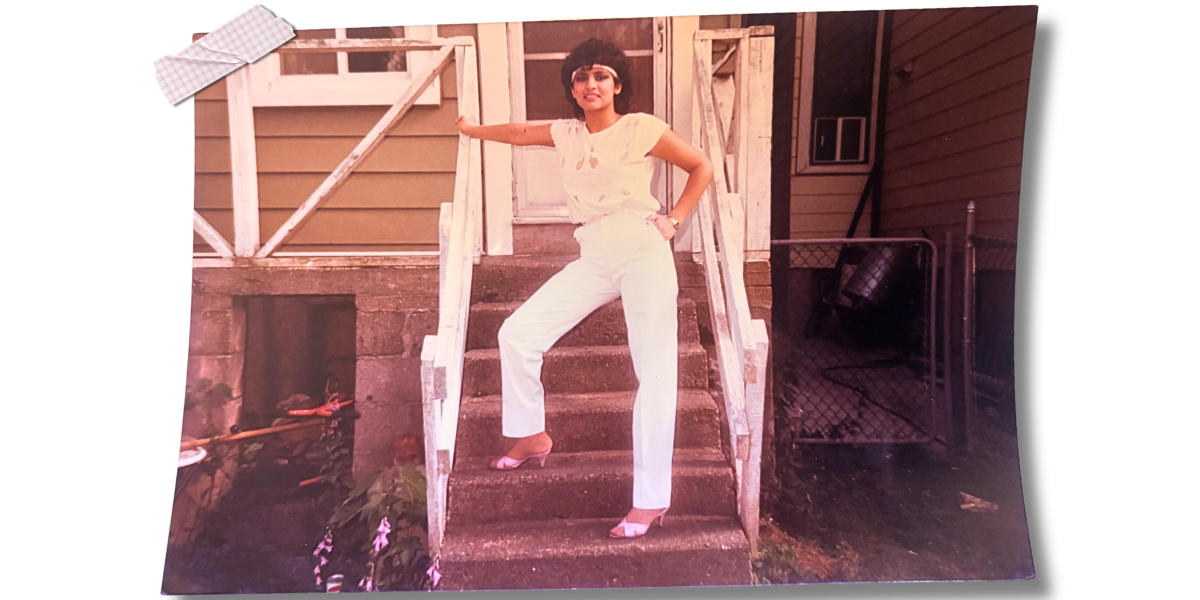
My mother grew up here. She arrived in 1969 at seven years old and lived between Toronto and Ottawa until she was twenty-eight. Back then, the racism was loud; she was called a “Hindoo” by school bullies and mocked for her dark skin. Later, when she was older, she would be exoticized. I assumed that by the time I arrived, her generation had absorbed the debt of belonging so mine wouldn’t have to.
Instead, I found that the exclusion had simply gone underground, mapping itself onto geography and class. When I began working in Toronto, managers frequently assumed I lived in Scarborough — the city’s shorthand for “Brown, immigrant, and working-class” — despite the fact that I lived downtown. It is a quiet map of where they think a body like mine belongs.
The exclusion has also found legislative expression. In Quebec, Bill 21 has codified the mosaic’s fine print, effectively telling Muslim women in hijabs and Sikh women in dastaars that their career aspirations in the public sector are contingent on the erasure of their faith. This isn’t secularism. It is a state-sanctioned purge. It tells the woman in a turban or a veil that her presence is a contamination of the public gaze.
As the Supreme Court of Canada prepares to hear the final constitutional challenge to this law later this month, the stakes have shifted from a local debate to a national trial of the ‘notwithstanding clause’ itself. The question at the heart of the case is not just about symbols, it is about whether the state can legally immunize itself against the very Charter of Rights it claims as its moral backbone.
This is a recurring script. In the early 20th century, exclusionary laws were passed to keep South Asians out of a “White Canada.” Today, the language has softened — now we speak of housing pressures and social cohesion — but the underlying logic remains.
We have engineered an economy of human extraction. According to front-line organisations like Indus Community Services and Ladliyaan in Brampton, international students are propping up the balance sheets of strip-mall colleges and the rental yields of predatory landlords. We lure South Asian youth with the false promise of a future, only to use them as high-interest ATMs. They are sold a dream by fake agents, only to be abandoned to a nightmare.
The exploitation has become so severe that advocates have documented a rise in “sex for rent” schemes and precarious sex work as a means of survival. Because migrant sex work is essentially criminalized under Canadian immigration law, these women — queer and trans women included — have no legal safety net and no recourse to the police, they become prime targets for traffickers.
But when the housing crisis — engineered by decades of policy failure — becomes a political liability, the mosaic is forgotten. In Facebook housing groups across the GTA (and even in Montreal, from what I’ve seen), the script writes itself in real time: South Asian tenants blamed for driving up rents, Indian students accused of taking units, Brown faces attached to the housing crisis that policy built.
The victims of extraction are recast as the cause of the crisis. We don’t want students, we want a disposable workforce to prop up a hollowed-out economy. And thus, the students become the scapegoat, and the celebration ends.
This failure of protection reached its zenith in June 2023, when Hardeep Singh Nijjar — a Canadian citizen — was shot and killed in Surrey, B.C. The RCMP later confirmed that individuals connected to the government of India were involved. A foreign state had, allegedly, murdered a Canadian on Canadian soil.
The public debate that followed was a masterclass in displacement. We talked about Sikh separatism and “diplomatic inconvenience.” We talked about everything except the fundamental breach of the social contract: that a citizen was killed for his identity, while his government optimized for trade deals and optics. The promise of belonging turned out to have a foreign policy asterisk.
The lawyer who mocked my accent was not a bigot in any way she would recognize. This is the most insidious function of the multicultural brand: it allows Canadians to feel that the work is already done. Because the policy exists, the racism must not. Because the Prime Minister wore a sherwani, the belonging must be real.
I do not think Canada is beyond repair. But repair requires more than marketing. It requires honesty about who gets to be fully human here, and who is merely “colourful.” It requires a move away from multiculturalism as a tool of management and toward protection as a legal and social reality.
Canada keeps telling me I belong here. I’m still waiting for it to act like it means it.
Nice. I feel like your colleague who made that comment felt like she was more in on the culture than she really was.
People need to accept that there’s going to be a spectrum, of accents, of American or Canadian -ization of non-white residents.
When I was at university my Indian friends would always ask me why I have such a good accent - I would simply say, and I wonder why you guys don’t. The Brits left us literally the same day.
I absolutely detest ‘compliments’ about my English or my accent by non-Pakistanis for this reason.
Failure of multiculturalism has been a theme in the U.K. for a longtime now. It seems Canadians are coming to terms with the same failure.
May be it is time for integration… https://www.ox.ac.uk/news/2025-09-05-expert-comment-if-multiculturalism-has-failed-then-what-about-integration